Specifying Garage Doors: What You Need to Know
Garage doors sit at the intersection of structure, envelope performance, fire safety, and daily operability—yet they're frequently left to a late-stage product selection rather than treated as a designed building element. That's a mistake. A door that fails to account for wind zone requirements, thermal bridging, or fire separation duties can create costly change orders, compliance issues, and unhappy facility managers for years to come.
This guide walks through the critical specification decisions for garage doors on commercial, industrial, and multi-unit residential projects. We’ll walk through:
Choosing the Right Door Construction for the Application
Wind Load & Structural Requirements
Thermal & Energy Code Compliance
Fire-Rated Assemblies: What the IBC Actually Requires
Operators, Hardware, & Accessibility
We've also pulled together a checklist so you can be sure you’ve checked every box before you specify. Let’s dive in!
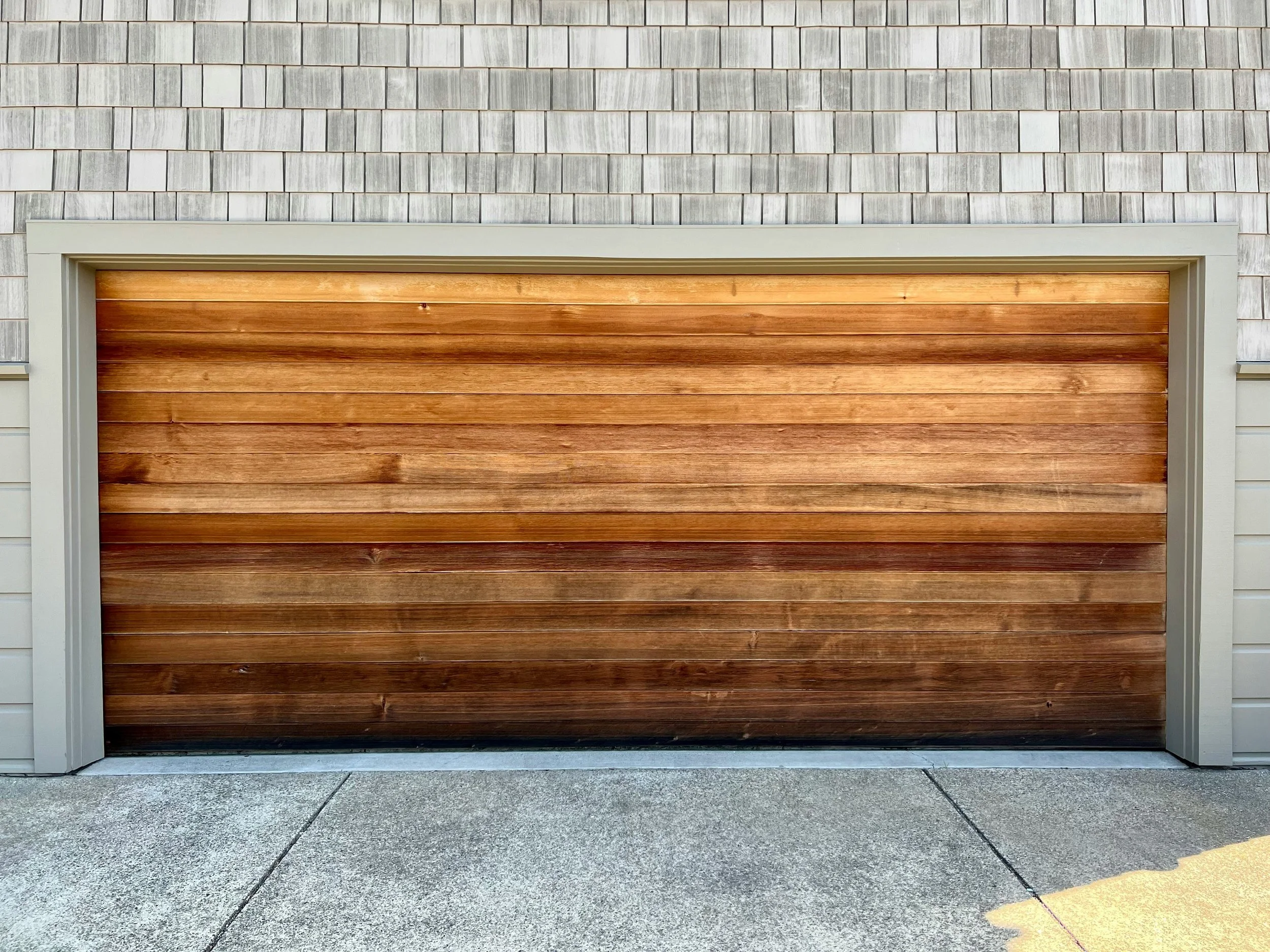
Dan Akuna on Unsplash
Choose the Right Door Construction for the Application
Not all garage doors are built the same. The structural configuration you specify will drive thermal performance, load capacity, and long-term maintenance requirements. The three primary types in commercial and industrial work are:
Sectional Steel Doors
The default for most commercial applications. Panels interlock and travel vertically along a track system, making them space-efficient. Specify 24-gauge minimum for light commercial, stepping up to 20-gauge for industrial or high-cycle environments. Insulated sectional doors can reach R-values up to R-18 with polyurethane core construction — critical for conditioned warehouses and attached garages in climate zones 4 and above.
Rolling Steel Doors (Coiling)
Better suited to tight overhead clearance conditions. The curtain coils above the opening rather than tracking horizontally. Available in slat, sheet, or grille configurations. For fire-rated assemblies, rolling steel is the more common solution — the coiling curtain can be integrated with a fusible link or electrical release for self-closing behavior. Confirm that the fire-rated door assembly (door + frame + hardware) carries a listed label from a recognized testing agency.
High-Speed Fabric Doors
Increasingly common in food processing, cold storage, and clean-room environments where cycle frequency is high (500+ cycles per day) and thermal separation is a priority. Standard steel doors aren't designed for this load. Specify accordingly and confirm the door's MTBF (mean time between failures) rating and self-repair capability in the event of curtain contact.
Specification Note: Always specify the complete door system (panel, track, spring assembly, and operator) from a single manufacturer where possible. Mixed-manufacturer assemblies can void warranties and create liability grey areas on load calculations.
Wind Load & Structural Requirements
Garage doors represent large, flexible openings in the building envelope — they are among the most vulnerable elements in a wind event. Post-hurricane code cycles have significantly tightened requirements in coastal and high-wind regions, and engineers need to verify compliance rather than assume a standard door is adequate.
Key Code References
DASMA 108 — Test method for determining wind load resistance of sectional garage doors
ASCE 7 — Governs design wind pressures for the site; these feed directly into door selection
ANSI/DASMA 102 — Standard for sectional garage door construction
Florida Product Approval (FBC) — Required for any door installed in Florida; look for a valid NOA (Notice of Acceptance)
In practice: calculate your design wind pressure from ASCE 7 for the components and cladding category, then cross-reference with the manufacturer's certified pressure ratings. Doors in high-velocity hurricane zones (HVHZ) require impact-rated glazing in any window sections and specific bracing configurations documented in the approval.
Structural Reinforcement Bars
For large openings (typically above 10 feet wide), specify horizontal reinforcement struts between panel sections. End stiles and center stiles also affect span capacity. For very wide openings — loading dock doors at 14'×14' or larger — a structural engineer should review the door's reaction loads on the surrounding framing, not just the door's own rating.
| Door Width | Typical Application | Min. Gauge (Steel) | Structural Note |
|---|---|---|---|
| Up to 9' | Residential / light commercial | 25 ga. | Standard end stiles adequate |
| 9' – 14' | Commercial, small fleet | 24 ga. | Add horizontal reinforcement struts |
| 14' – 20' | Loading docks, truck bays | 20–22 ga. | EE review of jamb loads recommended |
| 20'+ (custom) | Aircraft hangar, industrial | Per engineer | Custom engineering required |
Thermal & Energy Code Compliance
ASHRAE 90.1 and IECC have both tightened envelope performance requirements over successive code cycles. Garage doors in conditioned spaces — whether attached to a heated warehouse, a condo parking structure with heated lobbies, or a commercial vehicle maintenance facility — must now be explicitly accounted for in the envelope performance calculations.
Key thermal specification variables include:
Core insulation type: Polystyrene (EPS) inserts deliver R-6 to R-10; injected polyurethane achieves R-12 to R-18 with better adhesion and no air gaps developing over time
Thermal break at perimeter: Steel panel construction without a thermal break creates a significant cold bridge at the frame. Look for thermal strut systems or polyurethane edge sealing
Weather seals: Bottom seals, top seals, and side jamb seals each contribute to air infiltration performance; specify flexible astragal bottom seals in freeze-thaw climates rather than rigid brush seals, which can stiffen and fail
Glazing inserts: Any vision light or window section in the door panel must meet the same U-factor requirements as fenestration under your applicable code
Energy Code Tip: IECC Table C402.4 lists maximum U-factors for garage doors by climate zone. For climate zones 5 and above (much of Canada and the northern U.S.), the maximum opaque door U-factor is 0.37. An uninsulated steel door has a U-factor near 1.0—keep this out of conditioned envelope calculations entirely, or use it only in unconditioned parking decks.
Fire-Rated Assemblies: What the IBC Actually Requires
This is where misspecification most commonly occurs. The International Building Code and NFPA 80 govern fire door assembly requirements, and the rules for garage doors in fire-separation conditions are specific.
When Is a Fire Rating Required?
The most common trigger for AEC work is a mixed-occupancy separation — an attached parking garage adjacent to a business, mercantile, or residential occupancy. IBC Table 508.4 sets the required fire-resistance rating for the separation wall, and openings in that wall must carry a door assembly rated at ¾ of the wall rating per NFPA 80.
A 2-hour fire wall requires a 1.5-hour rated door assembly. A 1-hour fire partition requires a 45-minute rated door. Do not spec a standard insulated sectional door in this condition — it will fail a plan review.
Labeled Assemblies
Specify a complete, labeled fire door assembly — door, frame, hardware, and fusible link or electrical operator release — that has been tested and listed as a unit by UL, Intertek, or another accredited testing agency. The label must be permanently attached to the door, readable after installation. Confirm that the fire label matches the required rating for your separation.
Operators on Fire-Rated Doors
Automatic operators on fire-rated rolling doors must include a heat-activated release (fusible link) that allows the door to close without power, and in many jurisdictions, a listed smoke detector integration for early closure. Verify AHJ requirements during design — some authorities require the door to fail-close on any power interruption, not only on heat detection.
Operators, Hardware, & Accessibility
The door operator is not a commodity add-on — it determines long-term reliability and code compliance for accessibility and egress.
Operator Sizing
Match the operator to the door's dead weight, not just the nominal opening size. A 14'×14' insulated sectional door can weigh 600–900 lbs depending on gauge and insulation. Undersized operators fail prematurely. Specify operators by horsepower rating and confirm the manufacturer's maximum door weight rating at the cycle frequency expected (standard vs. heavy-duty vs. industrial).
Entrapment Protection
UL 325 is the governing standard for door operators. Auto-reverse on obstruction (via photo-eye or contact reversal) is mandatory for all automated doors serving pedestrian-accessible areas. For vehicular-only dock doors in restricted areas, verify AHJ interpretation — some allow reduced entrapment protection where pedestrian access is controlled.
Pedestrian Doors in Large Panels
For large overhead doors where egress is required, specify an integrated pass door (wicket door) or a separate adjacent egress door meeting IBC 1010 requirements. A 16-foot loading dock door does not satisfy egress requirements on its own — confirm the egress path regardless of how frequently the large door is expected to be open.
- Door type confirmed for application (sectional, rolling, high-speed)
- Steel gauge specified for span and cycle frequency
- Design wind pressure calculated per ASCE 7; door pressure rating confirmed
- HVHZ or Florida Product Approval verified if applicable
- Insulation type and R-value consistent with IECC/ASHRAE 90.1 climate zone
- Thermal break at perimeter specified
- Fire rating confirmed against IBC occupancy separation requirements
- Labeled assembly (door + frame + hardware) from single manufacturer
- Fusible link / smoke-detector release on fire-rated automated doors
- Operator sized to door dead weight; UL 325 compliance confirmed
- Entrapment protection (photo-eye, auto-reverse) in pedestrian areas
- Egress strategy confirmed (wicket door or adjacent egress door)
- CAD, BIM, and specification data downloaded from manufacturer
Getting the Right Technical Files into Your Project Documents
CADdetails carries manufacturer-backed CAD/BIM/3D models and specs from top-notch garage door manufacturers. No subscriptions, no paywalls—just download and specify.
Browse garage door products now→
Author: CADdetails
Cover image by Dillon Kydd on Unsplash
Cover image by AdobeStock